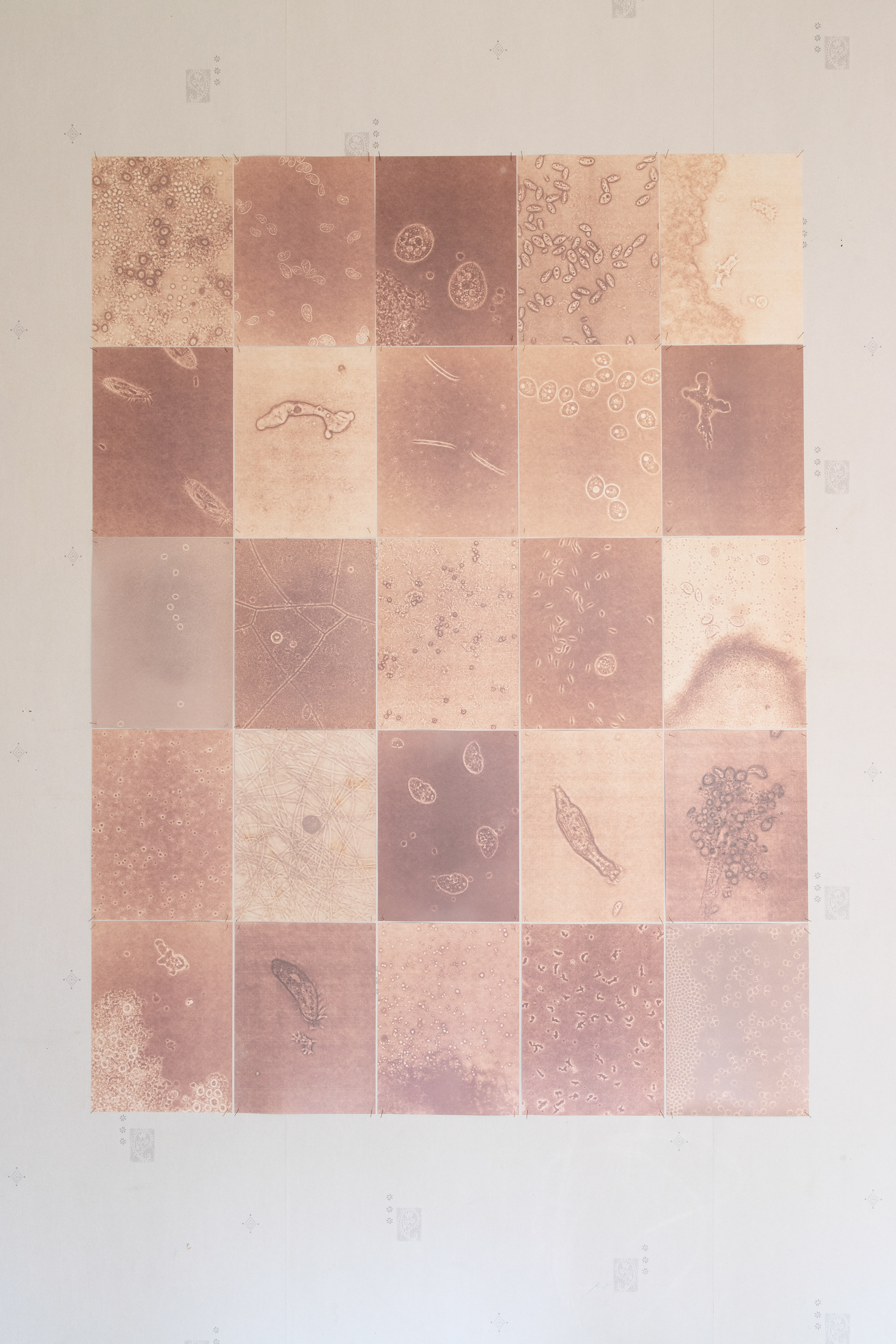
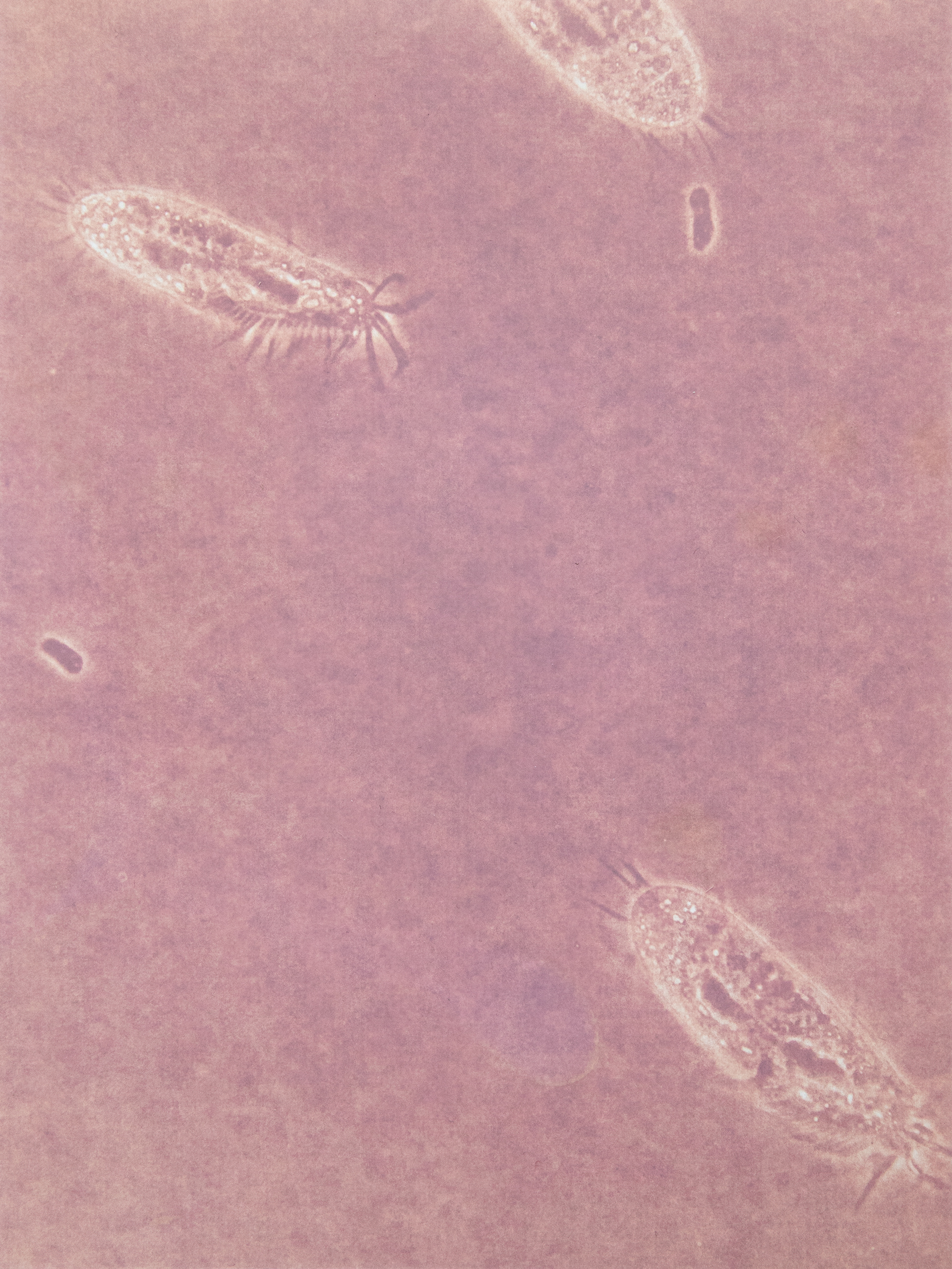
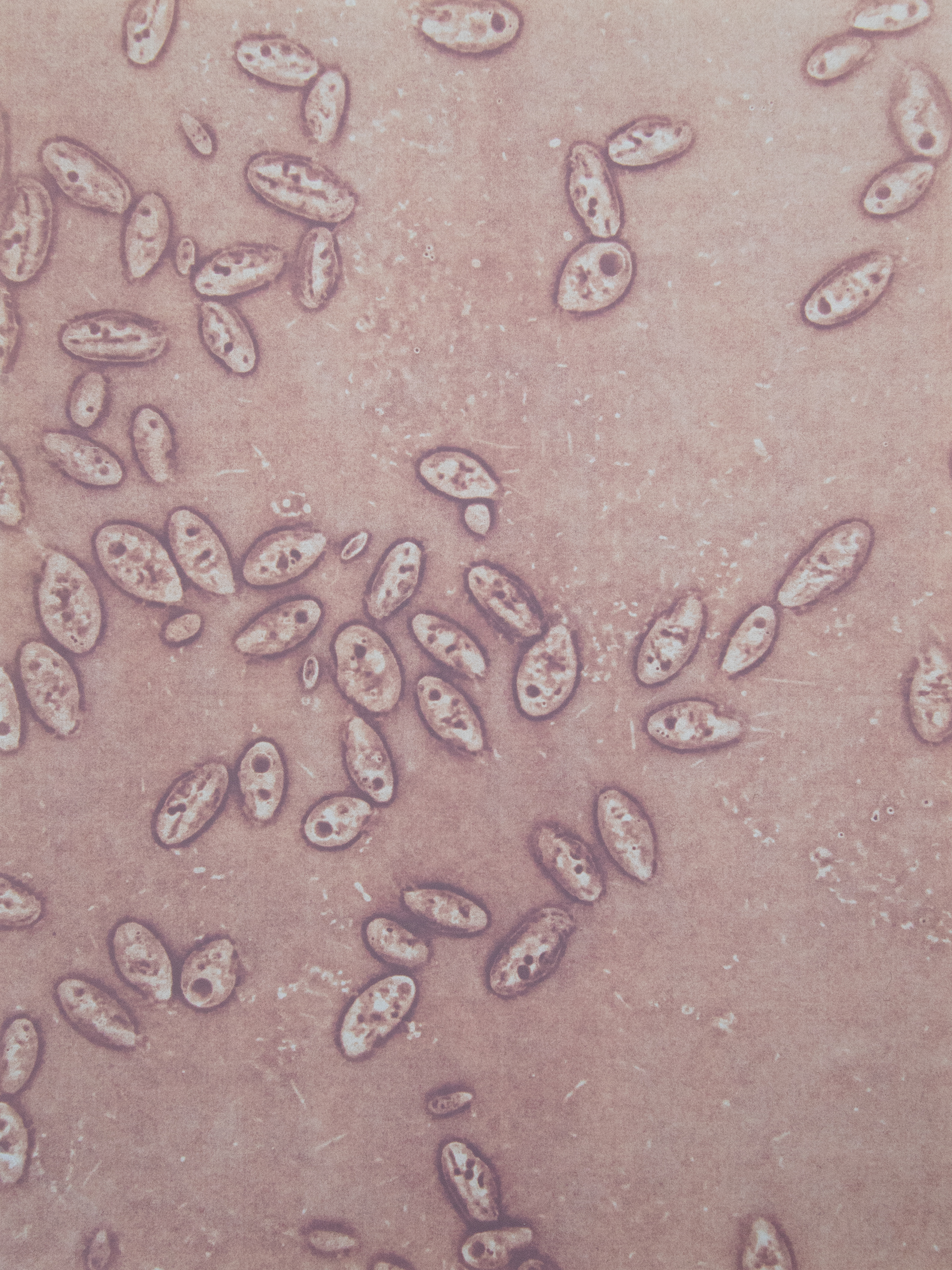
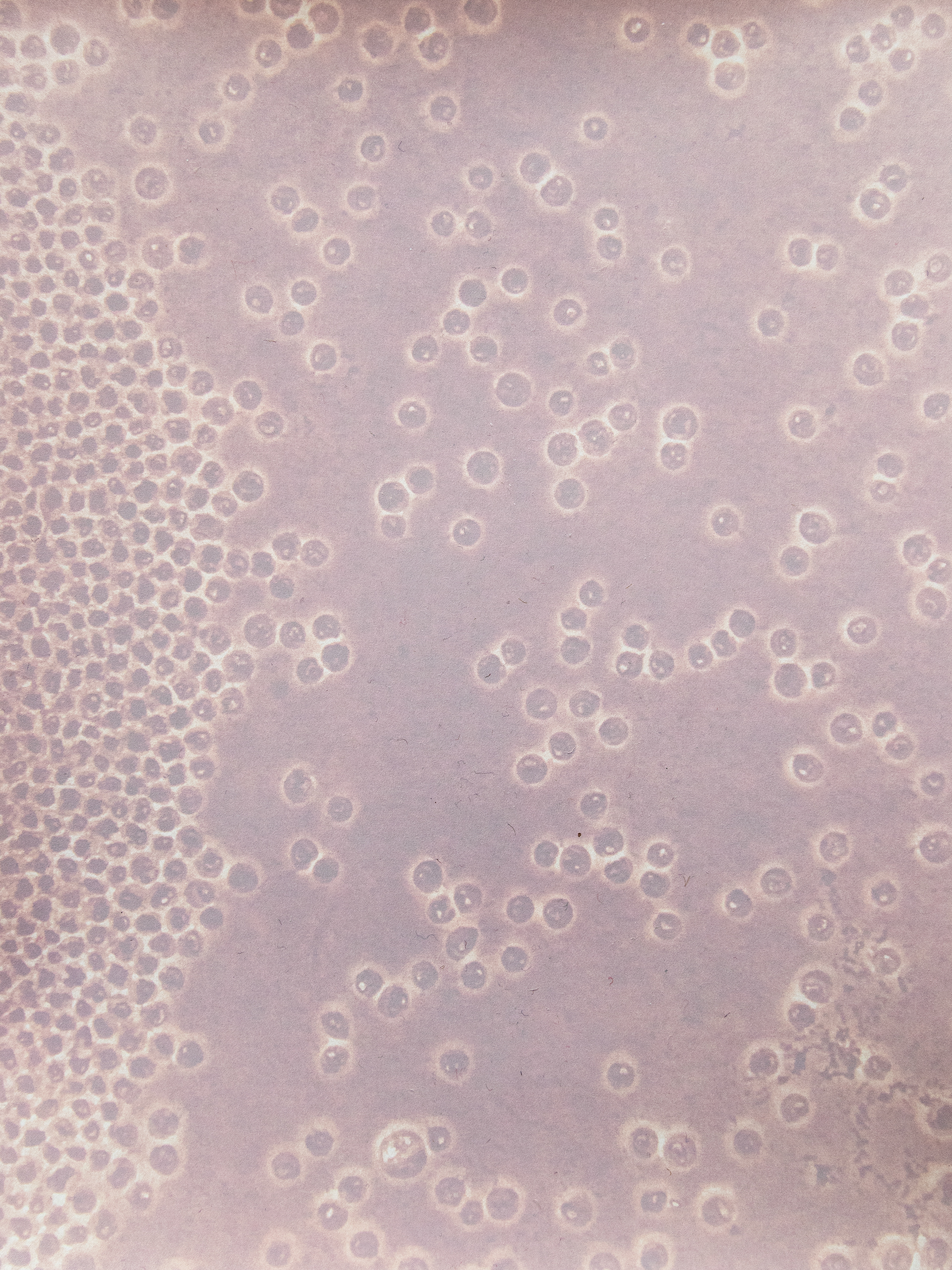
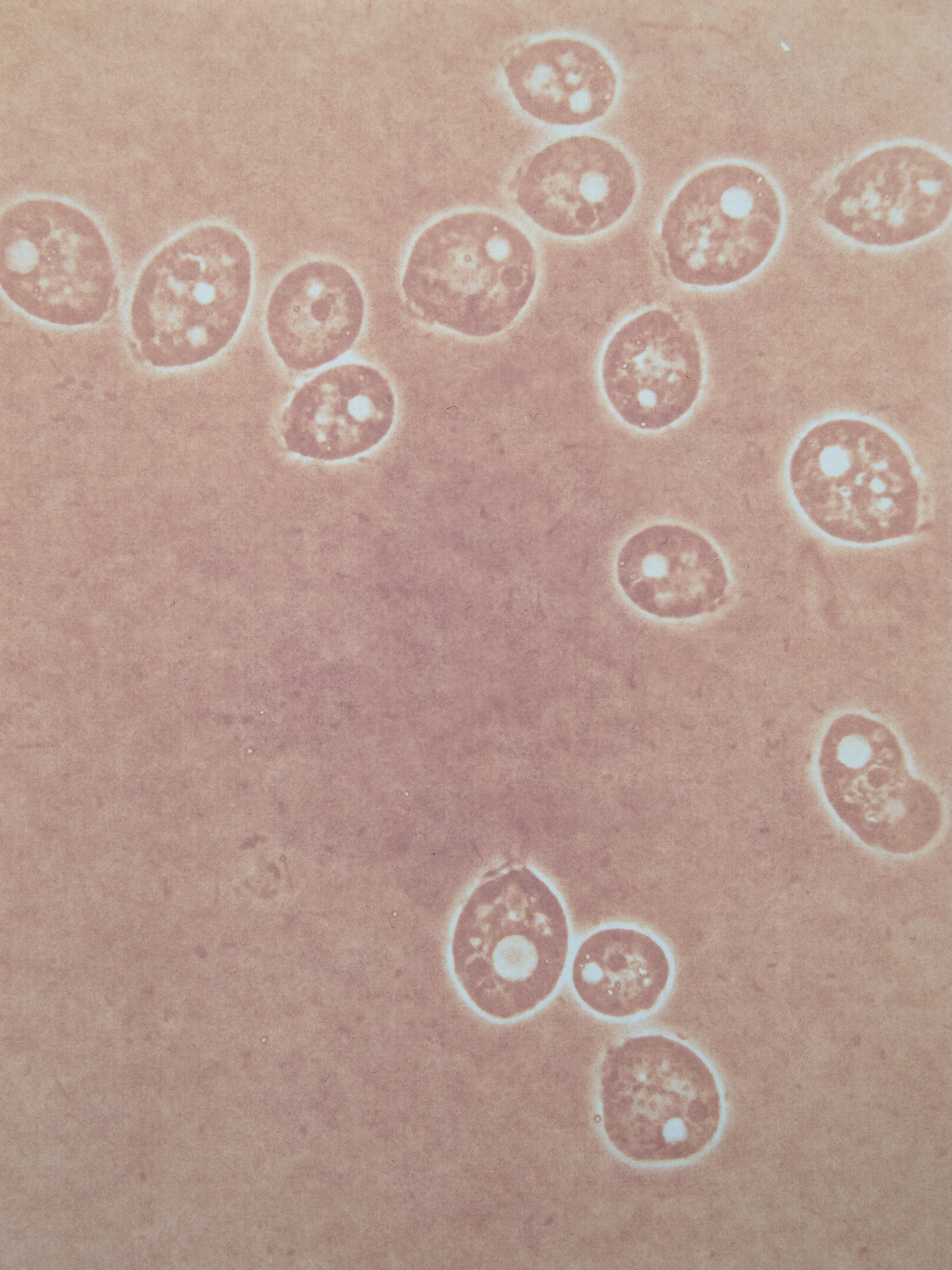
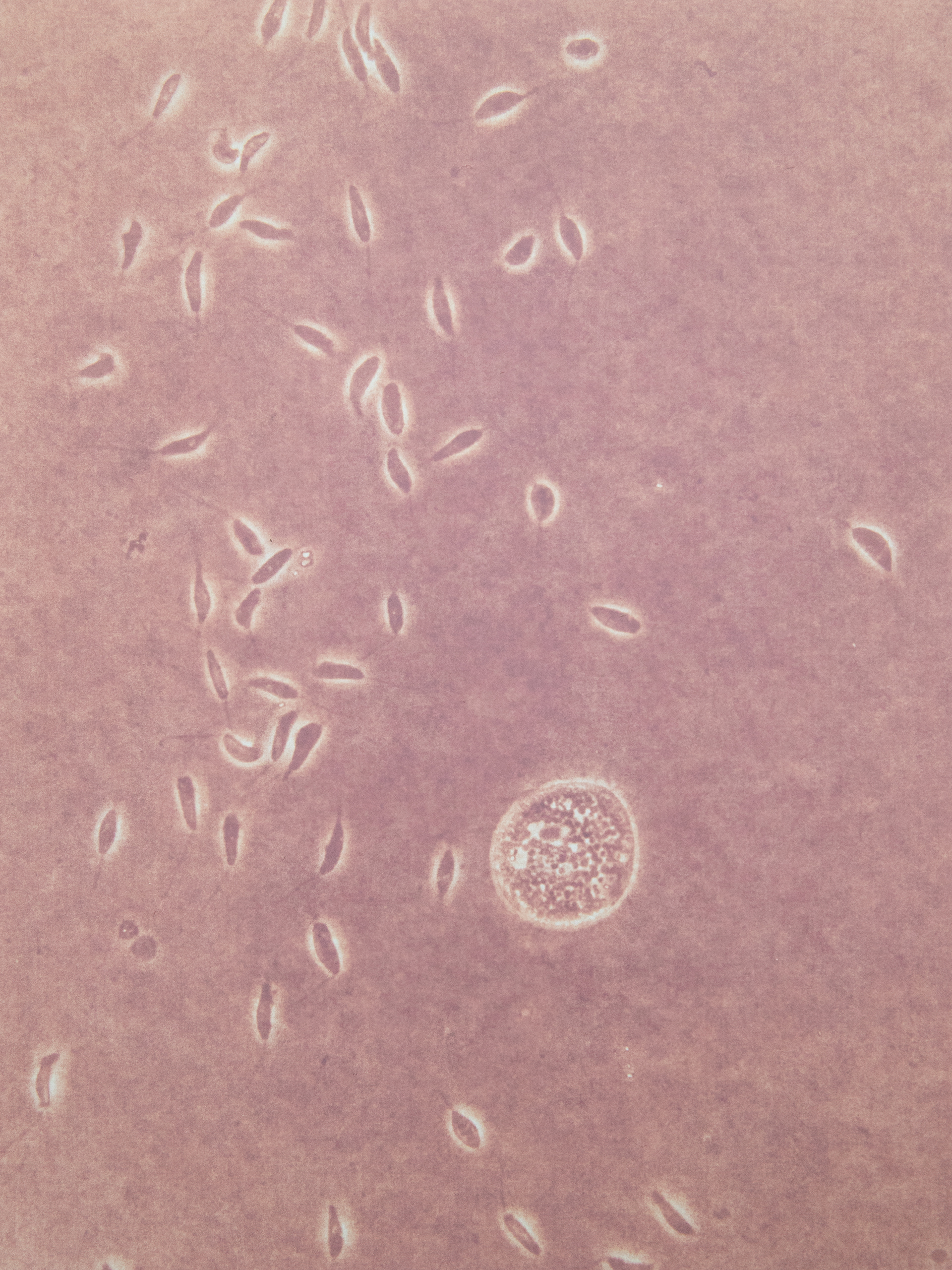
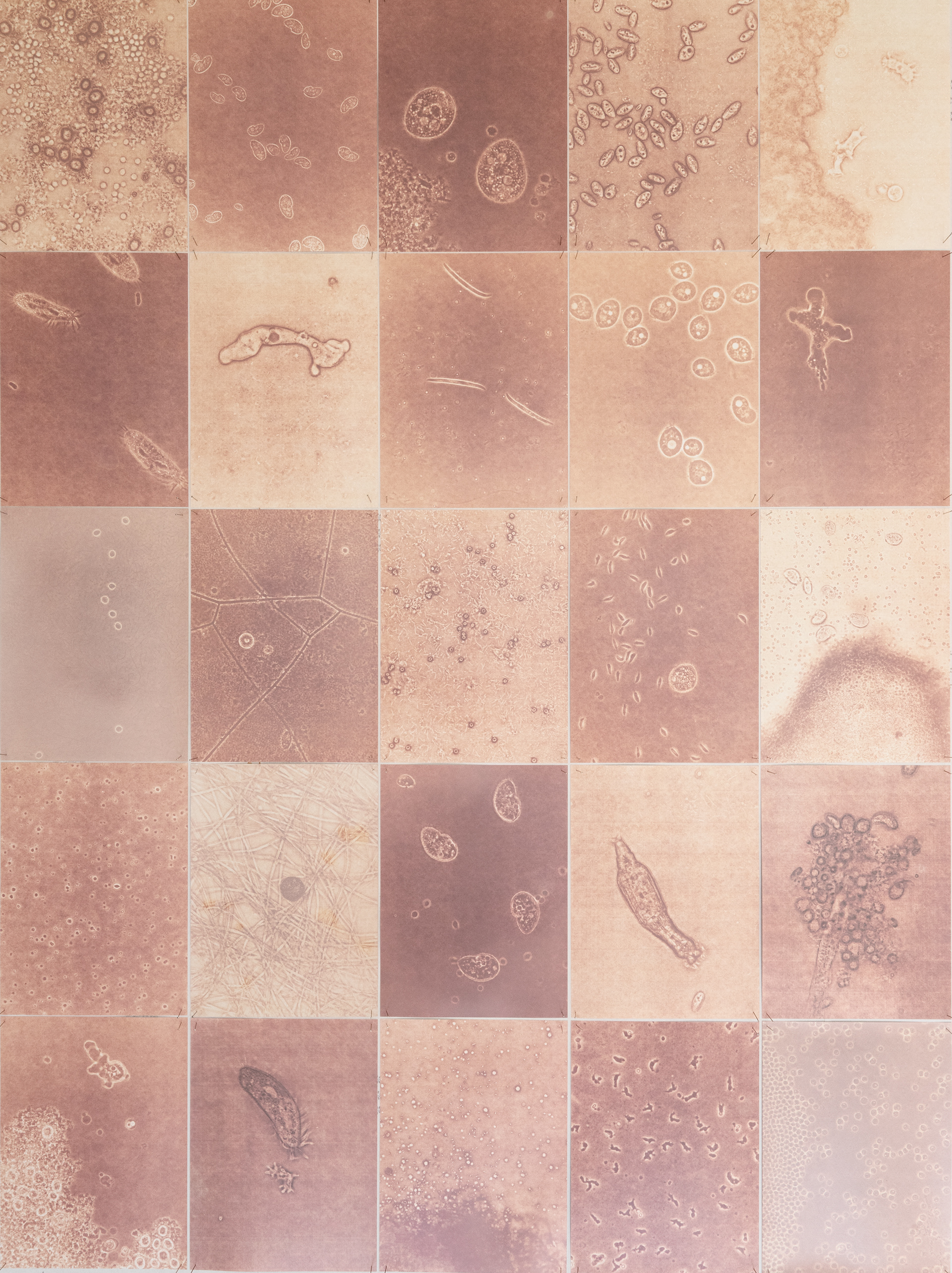
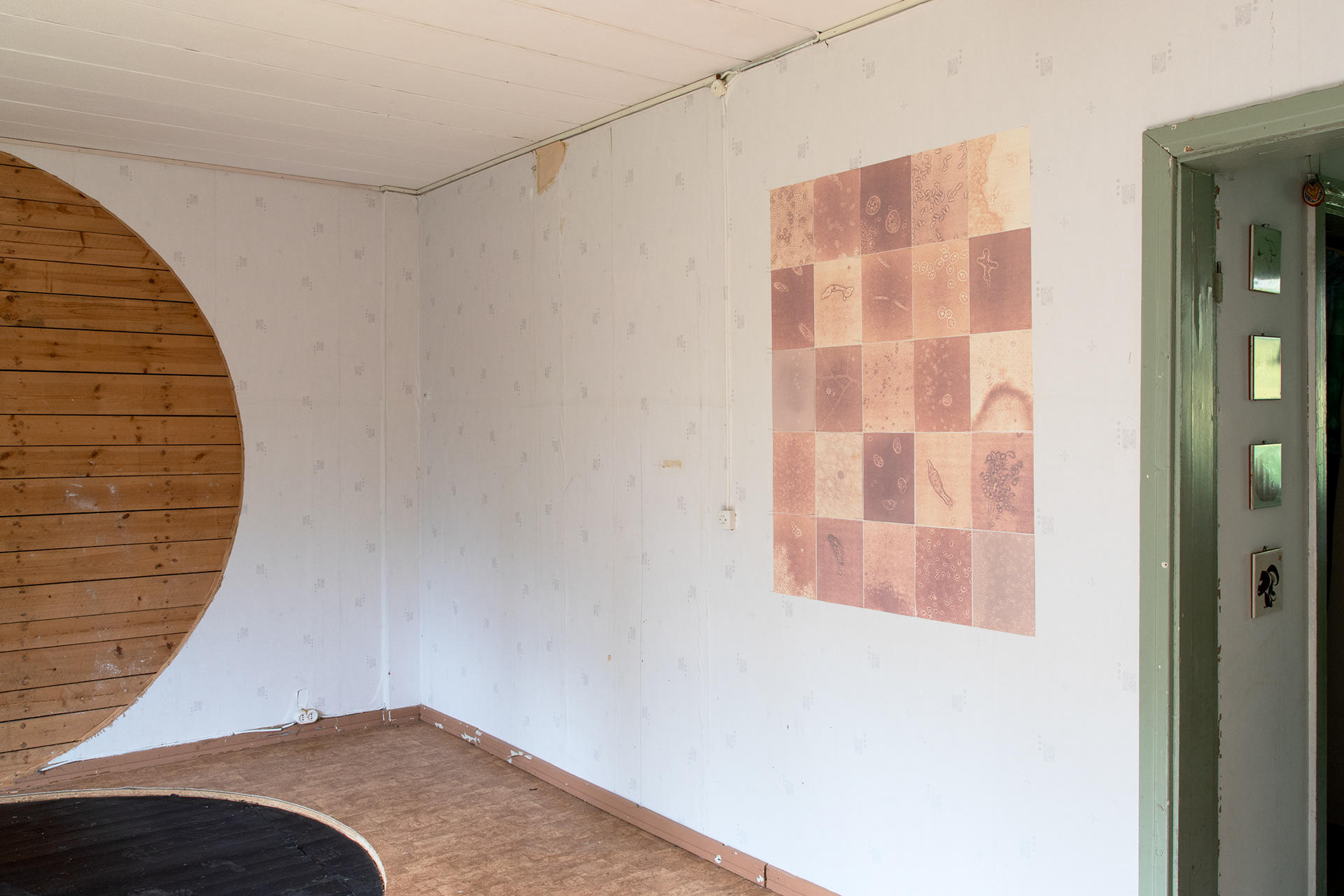
The microscopic organisms in this work originate from six samples collected from the grounds of Rajatalo, an abandoned house that has been transformed into an environmental project. The samples included, for example, mosses, soil, and decaying wood, all of which are favourable substrates for a variety of microbes. Using these samples, I prepared hay infusion cultures in which the microorganisms multiplied for about three weeks. The aim was to cultivate protists which are single-celled organisms. The work does, however, also contain one microscopic animal, which viewers may try to locate. Molds and bacteria are present as well.
The cultures undergo an interesting succession of development. Within a few days, the hay infusions become saturated with bacteria, which serve as food for the smallest protists. After about a week, the cultures teem with these small protists, including flagellates. Next, somewhat larger protists that feed on flagellates and other smaller microbes become abundant. Eventually there is a wide diversity of protists, with larger species preying on smaller ones. Amoebae and molds also proliferate. The communities are constantly changing.
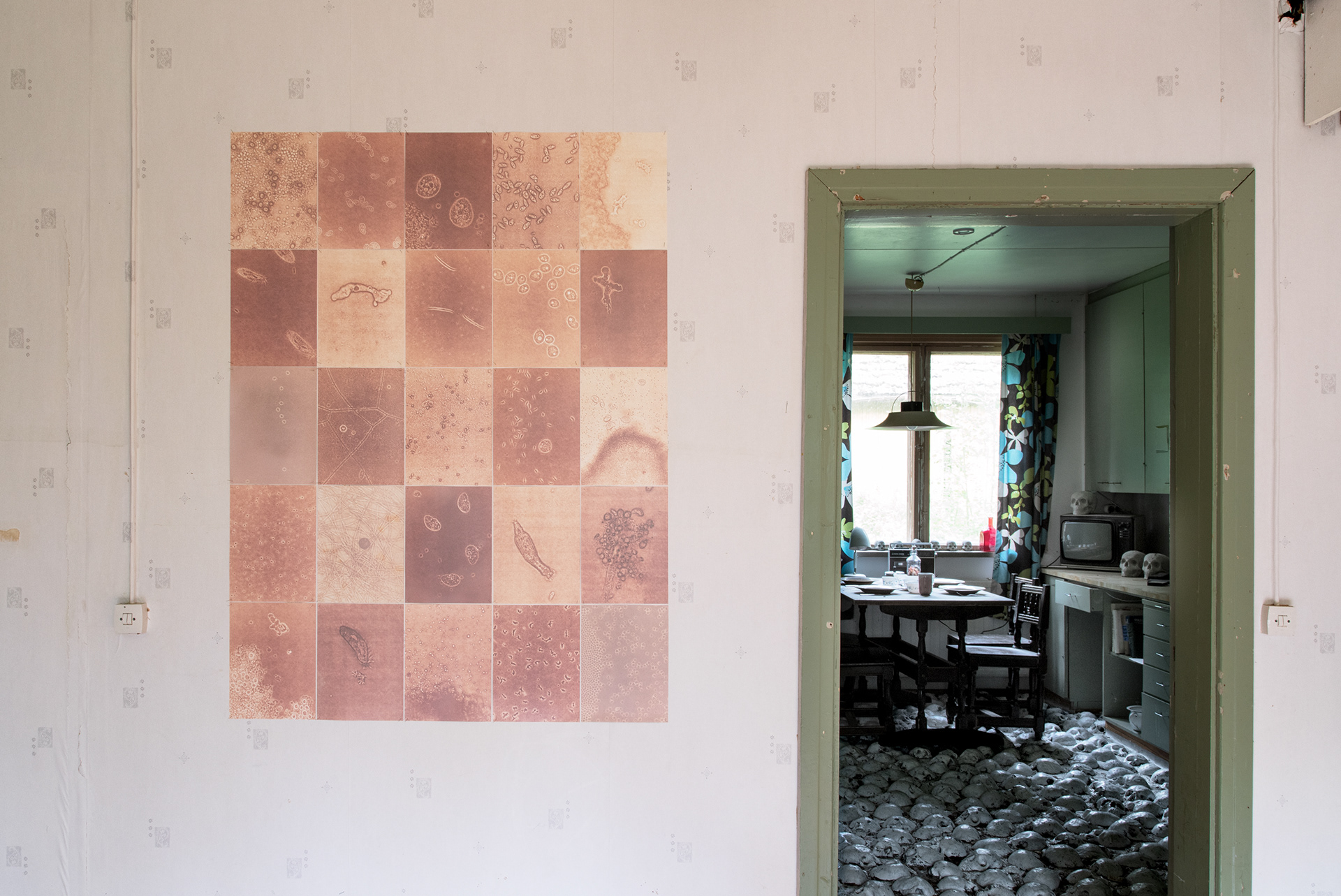
The images were created by combining microscopy with experimental analogue photography. The prints were made on expired black-and-white photographic papers that were exposed long enough for the image to appear in colour. The colours depend, among other things, on the properties of the paper itself. The papers were not developed; instead, they were placed directly into fixer. Despite being fixed, the prints may fade over time. During the various stages of the process, the images lost sharpness and their tones became subdued. The work is meant to be viewed from close range to appreciate the diversity of organisms it contains.
The work was installed inside Rajatalo in 2026.